
微软公司提供的对于网络专业人员的微软系统工程师认证。MCSE是指被证明能够在用Microsoft Windows NT Server 和Microsoft Backoffice服务器产品家庭构建的广泛的计算环境中进行有效地规划、实现、维护和支持信息系统的合格人员。
精选百科
本文由作者推荐
mcse
微软认证系统工程师的简称
中文名
微软认证系统工程师
外文名
Microsoft Certified Systems Engineer
别名
mcse
主要职责
规划、实现、维护和支持信息系统
认证的变化
相关性、严格性、简化性
相关课程
QueryingMicrosoftSQLServer2012
条例
网络基本架构的实现和管理等
简介
微软认证系统工程师(MCSE)
微软认证Internet系统工程师(MCSE+Internet)
是指技术资格的专业人员,能够部署、管理包括浏览器、代理服务器、主机服务器、数据库、消息系统及电子商务等部件的Internet/Intranet解决方案。管理和分析Web站点。
微软认证方案开发人员(MCSD)
微软公司提供的对于开发人员的微软方案开发人员认证。MCSD是指被证明能够用微软的开发工具、技术和平台,包括Microsoft Office和Microsoft BackOffice,设计和开发提供定制业务方案的合格人员。
微软认证产品专家(MCP)
由微软公司提供的对于精通一种微软技术产品的人员的认证。MCP是被证明至少对一种微软操作系统有深入了解的人。此人可能需要通过附加的微软认证考试,以证明他在Microsoft Backoffice产品、开发工具或桌面应用程序方面有更多的技能。
微软认证Internet专家(MCP+Internet)
能胜任服务器系统的安装、配置和管理,通过CGI及ISAP脚本语言充分发挥服务器的扩展功能。
微软认证Site Building专家(MCP+Site Building)
在建立Web站点方面有专业能力。
微软认证数据库管理员(MCDBA)
微软认证培训教师(MicrosoftCertifiedTrainers)的缩写为 MCT
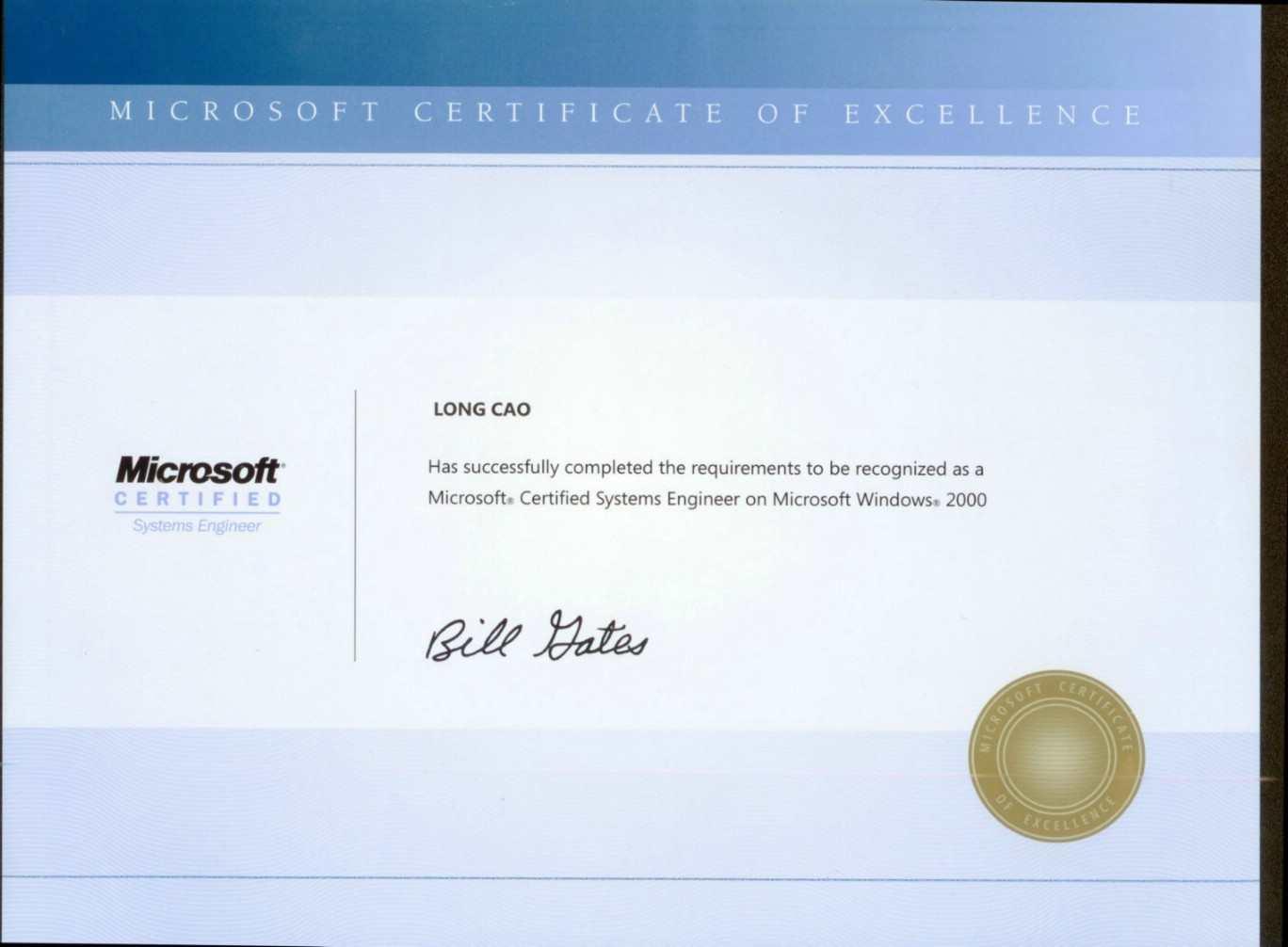
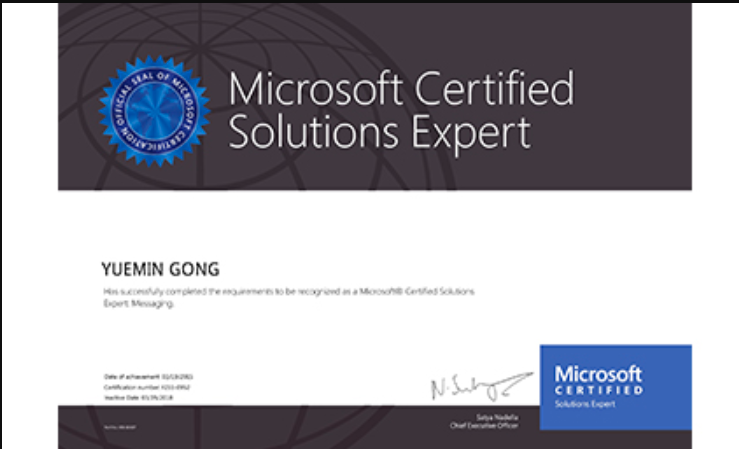
证件样本
微软认证系统工程师(MCSE)样本
mcse
认证变化
认证的变化---相关性
1、更广泛的技能:
云技术解决方案需要更广泛的技能,微软认证验证了更广泛的技能和经验,是一个技术解决方案,而不是一个单独的技术
2、持续能力验证:
为确保IT专业人员和开发人员具有必要的专业知识,掌握最新的解决方案技术,微软要求:
MCSD(微软认证解决方案开发专员)认证的其持有者每2年进行再次认证;
MCSE(微软认证解决方案专家)认证的持有者将需要每3年进行再次认证。
认证的变化---严格性
更严格的考试和认证要求
2、更高的认证要求:更深入和更广泛的知识、技能、经验
微软新认证变化---简化性
1、认证路径更清晰,认证起点很明确
2、提供的认证数量减少,使客户容易选择合适的路径
3、考试与课程名相同,一对一眏射,更容易学习与培训
认证减少了85%,提供30个左右的认证。
为了更好的为客户准备一个成功的IT职业生涯,微软已经通过以下的综合性的变化,增加了相关的技术认证计划
条例
成为MCSE需要掌握
1、网络基本架构的实现和管理---以Windows Server2003为例;
2、网络基本架构的规划和维护---以Windows Server2003为例;
3、活动目录的规划,实现和管理---以Windows Server2003为例;
4、网络安全的实现和管理---以Windows Server2003为例;
5、网络安全设计---以Windows Server2003为例;
6、网络操作系统管理---以Windows Server2003为例;
7、操作系统的安装,配置和管理---Windows XP专业版的安装,配置和管理.
课程
MCSE认证课程内容:一、Querying MicrosoftSQL Server 2012
1)Introduction to Microsoft SQL Server 2012
2)Getting Started with SQL Azure
3) Introduction to T-SQL Querying
4)Writing SELECT Queries
5)Querying Multiple Tables
6)Sorting and Filtering Data
7)Working with SQL Server 2012 Data Types
8)Using Built-In Functions
9)Grouping and Aggregating Data
10)Using Subqueries
11)Using Table Expressions
12)Using Set Operators
13)Using Window Ranking, Offset and Aggregate Functions
14)Pivoting and Grouping Sets
15)Querying SQL Server Metadata
16)Executing Stored Procedures
17)Programming with T-SQL
18)Implementing Error Handling
19)Implementing Transactions
20)Improving Query Performance
二、Administering Microsoft SQL Server 2012 Databases
1) Introduction to SQL Server 2012 and its Toolset
2)Preparing Systems for SQL Server 2012
3)Installing and Configuring SQL Server 2012
4)Working with Databases
5)Understanding SQL Server 2012 Recovery Models
6)Backup of SQL Server 2012 Databases
7)Restoring SQL Server 2012 Databases
8)Importing and Exporting Data
9)Authenticating and Authorizing Users
10)Assigning Server and Database Roles
11)Authorizing Users to Access Resources
12)Auditing SQL Server Environments
13)Automating SQL Server 2012 Management
14)Configuring Security for SQL Server Agent
15)Monitoring SQL Server 2012 with Alerts and Notifications
16)Performing Ongoing Database Maintenance
17)Tracing Access to SQL Server 2012
18)Monitoring SQL Server 2012
19)Managing Multiple Servers
20)Troubleshooting Common SQL Server 2012 Administrative Issues
三、Implementing a Data Warehouse with Microsoft SQL Server 2012
1)Introduction to Data Warehousing
2)Data Warehouse Hardware
3)Designing and Implementing a Data Warehouse
4)Creating an ETL Solution with SSIS
5)Implementing Control Flow in an SSIS Package
6)Implementing Control Flow in an SSIS Package
7)Implementing an Incremental ETL Process
8)Incorporating Data from the Cloud into a Data Warehouse
9)Enforcing Data Quality
10)Using Master Data Services
11)Extending SQL Server Integration Services
12)Deploying and Configuring SSIS Packages
13)Consuming Data in a Data Warehouse
四、Developing Microsoft SQL Server 2012 Databases
1)Introduction to SQL Server 2012 and its Toolset
2)Working with Data Types
3) Designing and Implementing Tables
4)Ensuring Data Integrity through Constraints
5)Planning for SQL Server 2012 Indexing
6)Implementing Table Structures in SQL Server 2012
7)Reading SQL Server 2012 Execution Plans
8)Improving Performance through Nonclustered Indexes
9)Designing and Implementing Views
10)Designing and Implementing Stored Procedures
11)Merging Data and Passing Tables
12)Designing and Implementing User-Defined Functions
13)Creating Highly Concurrent SQL Server 2012 Applications
14)Handling Errors in T-SQL Code
15)Responding to Data Manipulation via Triggers
16) Implementing Managed Code in SQL Server 2012
17)Storing XML Data in SQL Server 2012
18)Querying XML Data in SQL Server
19)Working with SQL Server 2012 Spatial Data
20)Working with Full-Text Indexes and Queries
五、Designing Database Solutions for Microsoft SQL Server 2012
1) Designing a Database Server Infrastructure
2)Designing a Logical Database Schema
3)Designing a Physical Database Implementation
4)Incorporating Data Files into Databases
5)Tuning Database Performance
6)Designing Database Security
7)Policy Based Management
8)Monitoring Server Health
9)Designing a Database Backup Solution
10)Automating Multi-Server Maintenance
11)Managing SQL Server with PowerShell
12)Replicating Data
13)Planning High Availability
考试科目
MCSE 2003常规科目及常用科目组合
Exam 70–290: Managing and Maintaining a Microsoft Windows Server 2003 Environment
Exam 70–291:Implementing, Managing, and Maintaining a Microsoft Windows Server 2003 Network Infrastructure
Exam 70–293:Planning and Maintaining a Microsoft Windows Server 2003 Network Infrastructure
Exam 70–294:Planning, Implementing, and Maintaining a Microsoft Windows Server 2003 Active Directory Infrastructure
Exam 70–298:Designing Security for a Microsoft Windows Server 2003 Network
Exam 70–270:Installing, Configuring, and Administering Microsoft Windows XP Professional
Exam 70–228:Installing, Configuring, and Administering Microsoft SQL Server 2000 Enterprise Edition
Exam 70-350: Implementing Microsoft® Internet Security and Acceleration (ISA) Server 2004
通过以上7门考试,将获得以下认证:MCSE 2003 MCSA 2003 MCP
Exam 70–228:Installing, Configuring, and Administering Microsoft SQL Server 2000 Enterprise Edition 此科目以过期,取代科目一般选择是:
Exam 70-431:Microsoft SQL Server 2005 Implementation & Maintenance
中文翻译
考试并没有规定顺序,全看自己学的如何,自由安排即可,不用拘泥于形式。
组合1:228,270,290,291,293,294,298。----最常见的考法,选择228只是为了获得MCDBA提前做好准备(见组合2)
共7门,获得以下3个证书:
MCP
MCSE 2003
MCSA 2003
组合2:228,229,270,290,291,293,294,298。
共8门,获得以下4个证书:
MCP
MCSE 2003
MCSA 2003
MCDBA 2000
组合3:270(可以用210代替),284,285,290,291,293,294,298(可以用297代替)。
共8门,获得以下5个证书:
MCP
MCSE 2003
MCSE Messaging 2003
MCSA 2003
MCSA Messaging 2003
组合4:227(可以用350代替),270,290,291,293,294,298,299。
共8门,获得以下5个证书:
MCP
MCSE 2003
MCSE Security 2003
MCSA 2003
MCSA Security 2003
附注:MCSE的安全和CIW,CCSP,CISSP等无法做横向比较,没有哪个好哪个不好的说法,自己取舍即可。
组合5:270,227,284,285,290,291,293,294,298,299。
共10门,获得以下7个证书:
MCP
MCSE 2003
MCSE Security 2003
MCSE Messaging 2003
MCSA 2003
MCSA Security 2003
MCSA Messaging 2003
mcse相关的文章

大理白族自治州,中华人民共和国云南省下辖自治州,地处云南省中部偏西,东邻楚雄州,南靠普洱市、临沧市,西与保山市、怒江州相连,北接丽江市,东经98°52′~101°03′,北纬24°41′~26°42′之间。截至2022年8月29日,大理州辖1市、8县、3自治县。州府驻地大理市下关,距昆明市331千米
玉山铁二(1980年4月7日出生于日本京都府城阳市)是一位日本影视男演员。他毕业于京都府立西城阳高中,并于1999年通过出演个人首部电视剧《麻辣女教师》正式进入演艺圈。2001年,他参演了特摄剧《百兽战队牙吠联者》。2004年,玉山铁二首次担任主演,出演运动电影《功夫棒球》,在片中饰演不屈斗志。20
大西洋(Atlantic Ocean),是世界第二大洋,占地球表面积的近20%,原面积9165.5万平方千米,在南冰洋成立后,面积调整为7676.2万平方千米,平均深度3627米,最深处波多黎各海沟深达9219米。

尚可名片
这家伙太懒了,什么都没写!
作者